Transmotor-Based Kinetic Energy Recovery System (KERS)
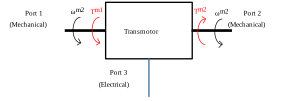
Transmotor-based flywheel energy exchange is a low cost, yet highly efficient method of energy transfer between vehicle wheels and a lightweight flywheel. This method utilizes one dual-rotor electric machine that enables us to overcome some of the shortcomings of the conventional electric kinetic energy recovery systems (KERS).The proposed system is capable of capturing far more mechanical power than its electrical power ratings. Furthermore, since a significant part of the energy exchange takes place in mechanical form, only a small fraction of the initial kinetic energy needs to be processed by the electrical energy storage device and the power electronic drive.
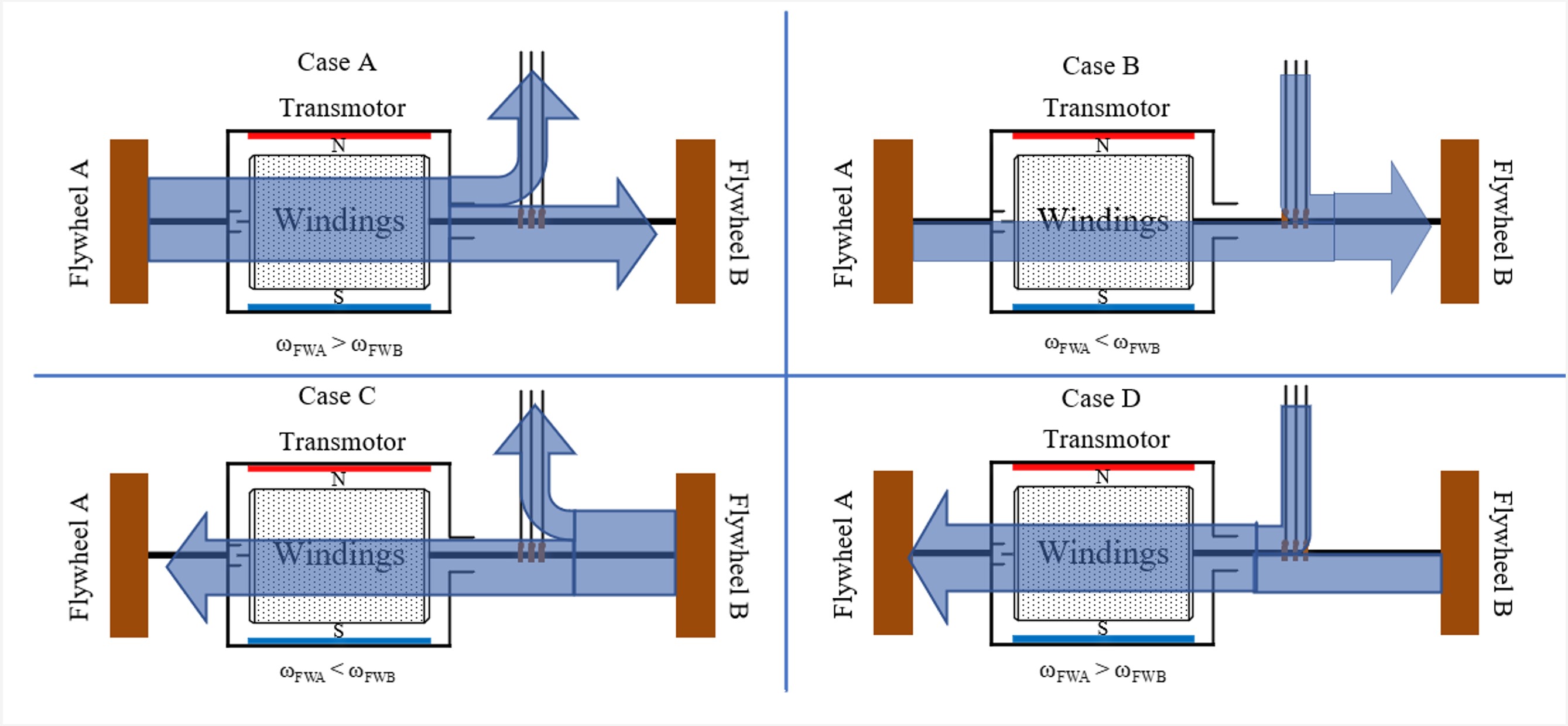
Transmotor-Based Kinetic Energy Recovery System (KERS)-Powerflow
Region I (flywheel A to B): The goal is to transfer power from flywheel A to flywheel B. Let’s assume the angular velocity in flywheel A is greater than in flywheel B. The excess power of flywheel A, due to the higher angular velocity, needs to be absorbed by the electrical port.
Region I (flywheel B to A): The goal is to transfer power from flywheel B to flywheel A. Let’s assume the angular velocity in flywheel B is greater than in flywheel A. Similarly, the excess power of flywheel B, due to the higher angular velocity, needs to be absorbed by the electrical port.
Region II: (flywheel A to B): The goal is to transfer power from flywheel A to flywheel B. Let’s assume the angular velocity in flywheel B is greater than in flywheel A. The supplied power by flywheel A, due to the lower angular velocity, needs to be compensated by the electrical port.
Region II (flywheel B to A): The goal is to transfer power from flywheel B to flywheel A. Let’s assume the angular velocity in flywheel A is greater than in flywheel B. Similarly, the supplied power by flywheel B, due to the lower angular velocity, needs to be compensated by the electrical port.